Why Learn Japanese? Benefits Beyond Anime
Author: Indilingo Team | Date: August 24, 2026
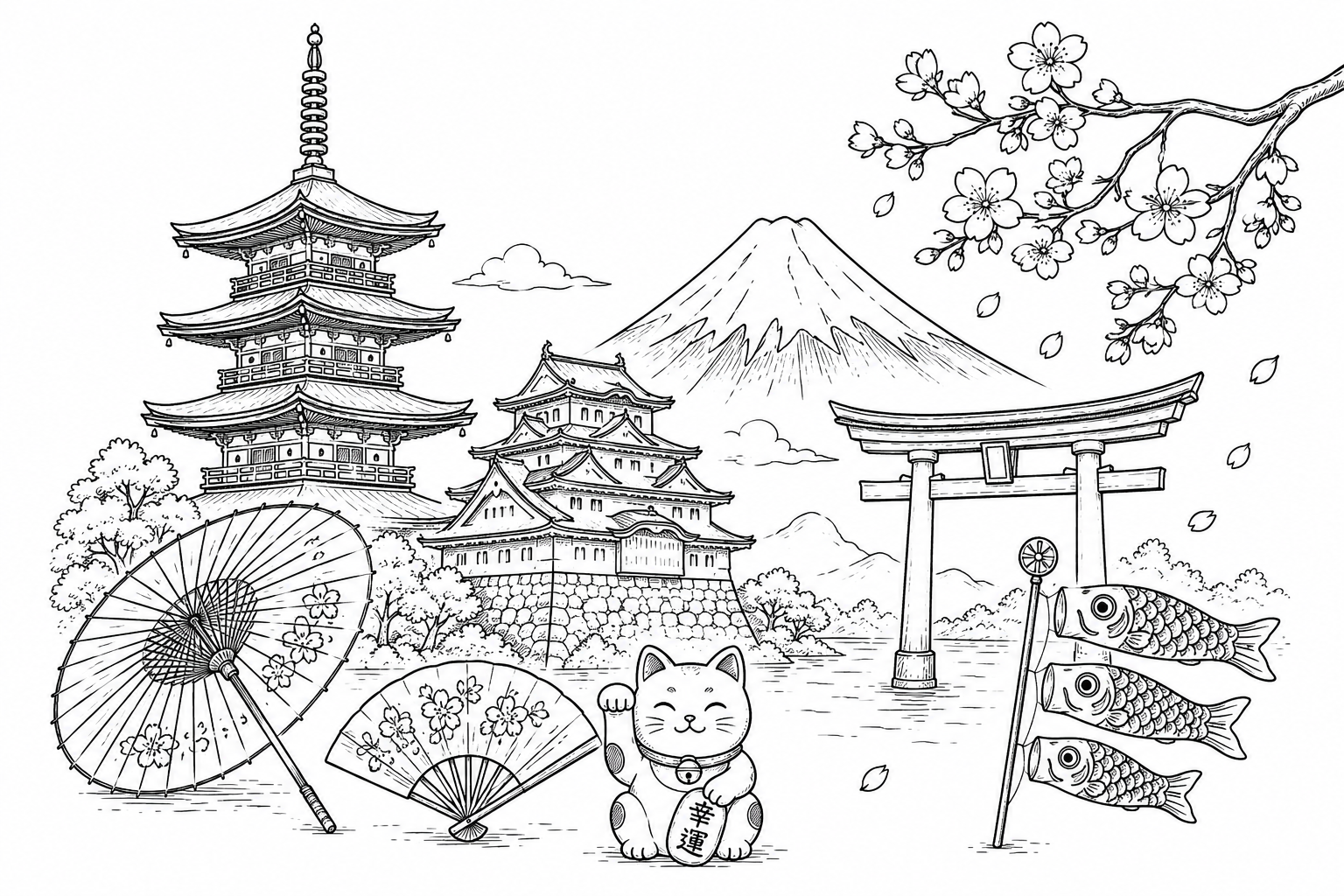
Anime, manga, games, and Japanese cinema inspire many people to begin learning Japanese. That is a perfectly good reason to start. A language does not become less serious because joy brought you to it. The question is what you discover after the subtitles stop being the only goal.
Japanese gives you a more direct relationship with life in Japan, a deeper understanding of its creative work, and a new way to organise meaning. It can support travel, friendships, family connections, academic interests, and professional collaboration. It also challenges assumptions that speakers of English and many other languages make about sentence structure, politeness, and what must be said explicitly.
Learning Japanese changes how you experience Japan
Japan is navigable without fluent Japanese, especially in major tourist areas. Yet ordinary situations quickly reveal the difference language makes. Small restaurants, neighbourhood events, medical questions, rural transport, local notices, and conversations with older people may offer limited English support.
Basic Japanese gives you more independence. More importantly, it helps you understand the social rhythm of an interaction: when a phrase softens a request, how gratitude is expressed, and why the same idea may be phrased differently depending on the relationship.
Popular culture becomes richer, not merely untranslated
Watching a favourite series without subtitles is a satisfying milestone, but comprehension is not binary. Long before you understand every line, you begin to hear character voice, age, status, regional speech, jokes, and wordplay. You notice when subtitles simplify a phrase because there is no neat equivalent.
The same applies to novels, interviews, games, music, comedy, theatre, and online communities. Learning Japanese lets you follow conversations around the work, not only consume the finished translation.
Japanese can complement specialised work
Japanese may be useful alongside expertise in automotive engineering, electronics, robotics, gaming, animation, design, manufacturing, tourism, translation, research, or international business. Language ability does not replace technical competence. It makes that competence easier to apply with Japanese colleagues, customers, and source material.
Business Japanese is a long-term goal because professional politeness and context matter. Beginners should not be discouraged by that. Everyday conversational ability already improves relationships and shows sustained commitment.
The writing system is difficult, but it is not one giant task
Japanese uses hiragana, katakana, and kanji together. Seeing all three at once can make the language look inaccessible. The solution is sequencing.
- Hiragana represents native sounds and grammatical endings. Learn it first.
- Katakana is often used for borrowed words, names, and emphasis. Learn it second.
- Kanji carries meaning and often has multiple readings. Learn common characters gradually through real words and sentences.
You do not need thousands of kanji before you can speak. You can begin listening and talking from day one while literacy grows alongside conversation.
What is easy and hard about Japanese?
Japanese pronunciation is relatively compact. It has a limited set of sounds, no grammatical gender, and verbs do not change according to the speaker's person. Those features can make early speaking less intimidating.
Word order and implied context are harder for many learners. Japanese commonly places the verb at the end, uses particles to show grammatical roles, and omits subjects when they are understood. Politeness levels require attention to the relationship, not only the dictionary meaning.
These are not random barriers. They are systems. Learn complete phrases, observe who says them to whom, and resist forcing every Japanese sentence into the shape of an English sentence.
Your language background matters
Korean speakers will recognise a similar subject-object-verb tendency, extensive use of particles, and sensitivity to social hierarchy, even though the languages are distinct. Speakers of Hindi, Tamil, Telugu, Kannada, Bengali, Turkish, and other languages that often place verbs late in the sentence may also find Japanese word order less alien than English speakers do.
Chinese readers may recognise the meanings of many kanji, although Japanese readings and usage still need to be learned. Every starting language supplies a different shortcut. Use those connections rather than studying through an unnecessary English layer.
Ten Japanese phrases to begin with
- こんにちは (Konnichiwa): Hello
- おはようございます (Ohayo gozaimasu): Good morning
- ありがとうございます (Arigato gozaimasu): Thank you
- すみません (Sumimasen): Excuse me or sorry
- お願いします (Onegaishimasu): Please
- わかりません (Wakarimasen): I do not understand
- もう一度お願いします (Mo ichido onegaishimasu): Once more, please
- どこですか (Doko desu ka): Where is it?
- いくらですか (Ikura desu ka): How much is it?
- 日本語を勉強しています (Nihongo o benkyo shiteimasu): I am studying Japanese
A manageable first month
Week 1: Learn hiragana in small groups while practising greetings and Japanese sound rhythm. Write by hand, read aloud, and use the characters inside real words.
Week 2: Learn basic sentence patterns with desu, question marker ka, and particles such as wa, no, and o. Introduce yourself without a script.
Week 3: Add katakana and learn borrowed words you are likely to see. Practise ordering food, asking directions, and talking about what you like.
Week 4: Begin a small set of high-frequency kanji, but keep speaking. Shadow a short dialogue daily and have at least two guided conversations.
Is Japanese worth learning?
Japanese is worth learning if your curiosity survives beyond the idea of quick fluency. Progress is uneven: speaking may move ahead while reading feels slow, then familiar kanji suddenly make the world more legible. The language rewards consistency and gives you access to social and cultural detail that translation often flattens.
Your original reason can be anime, a future trip, family, work, or simple fascination. Use it. Then learn Japanese with Indilingo from your own language and turn that interest into a daily practice.
Further reading
Loved the Blog?
Take your language learning journey a step further.
Explore Indilingo, beautifully designed, easy to use, and built for a multilingual world.