How to Say I Love You in 15 Indian Languages
Author: Jay Gala | Date: May 20, 2026
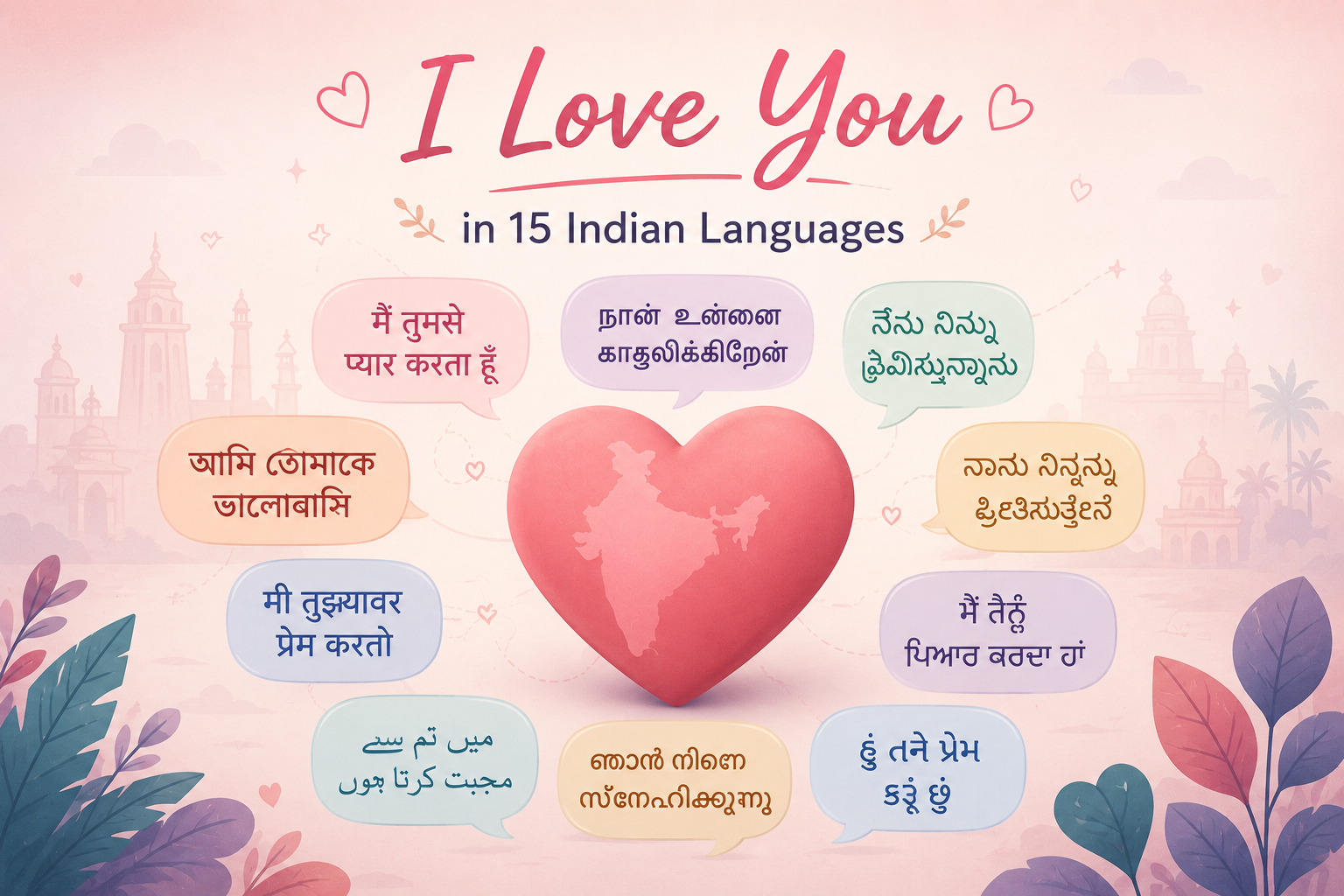
Love is universal, but how you express it is deeply personal — and deeply shaped by language. In India, saying "I love you" carries different weight, different nuance, and sometimes entirely different social implications depending on which language you say it in.
Some Indian languages have a single, direct phrase. Others have multiple ways to express love depending on who you're speaking to — a partner, a parent, a child, or a friend. And in many Indian cultures, love is more often shown than said, making the spoken words all the more powerful when they are used.
Here's how to say "I love you" in 15 Indian languages, with the cultural context that makes each one meaningful.
1. Hindi — मैं तुमसे प्यार करता/करती हूँ
Script: मैं तुमसे प्यार करता हूँ (male speaker) / मैं तुमसे प्यार करती हूँ (female speaker)
Pronunciation: Main tum-say pyaar kar-ta/kar-tee hoon
Meaning: I love you (romantic)
Cultural context: This is the classic, Bollywood-famous declaration of love. "Pyaar" (प्यार) is the most common Hindi word for romantic love. For a more intense, literary expression, you might hear "मैं तुमसे मोहब्बत करता हूँ" (Main tumse mohabbat karta hoon) — "mohabbat" is an Urdu-origin word that carries a deeper, more poetic weight. In Hindi culture, directly saying "I love you" is still a significant moment — it's not said casually.
2. Tamil — நான் உன்னை காதலிக்கிறேன்
Script: நான் உன்னை காதலிக்கிறேன்
Pronunciation: Naan unnai kaadhalikiren
Meaning: I love you (romantic)
Cultural context: "Kaadhal" (காதல்) is the Tamil word for romantic love, and it's a word that carries centuries of literary tradition. Tamil Sangam poetry from 2,000 years ago used "kaadhal" to describe passionate love. For familial love, Tamils more commonly use "பாசம்" (paasam), which means affection/attachment. Tamil culture tends to express love through actions rather than words, making a spoken "Naan unnai kaadhalikiren" a genuinely powerful statement.
3. Telugu — నేను నిన్ను ప్రేమిస్తున్నాను
Script: నేను నిన్ను ప్రేమిస్తున్నాను
Pronunciation: Nenu ninnu premistunnaanu
Meaning: I love you (romantic)
Cultural context: "Prema" (ప్రేమ) is the Telugu word for love, derived from Sanskrit. Telugu, with its musical vowel endings, makes this phrase sound particularly melodic. Tollywood (Telugu cinema) has popularized romantic expressions in Telugu globally, especially after the success of films like Arjun Reddy and the Baahubali franchise.
4. Bengali — আমি তোমাকে ভালোবাসি
Script: আমি তোমাকে ভালোবাসি
Pronunciation: Ami tomake bhalobashi
Meaning: I love you
Cultural context: "Bhalobasha" (ভালোবাসা) literally translates to "feeling good" — a beautifully understated way to describe love. Bengali is often called the "language of love" in India, partly because of Rabindranath Tagore's love poetry and partly because of the language's inherently lyrical quality. "Ami tomake bhalobashi" is one of the most recognized love phrases in all of Indian culture. Bengalis also use "আমি তোমায় ভালোবাসি" (Ami tomay bhalobashi) in everyday speech.
5. Marathi — मी तुझ्यावर प्रेम करतो/करते
Script: मी तुझ्यावर प्रेम करतो (male) / मी तुझ्यावर प्रेम करते (female)
Pronunciation: Mi tujhyaavar prem karto/karte
Meaning: I love you (romantic)
Cultural context: Marathi uses "prem" (प्रेम) for love, from Sanskrit. The phrase structure — literally "I on-you love do" — shows the postpositional grammar of Marathi. Marathi culture values restraint in expressing romantic feelings publicly, so this phrase is typically reserved for intimate, private moments. Marathi literature and the Lavani folk tradition have rich expressions of love and longing.
6. Kannada — ನಾನು ನಿನ್ನನ್ನು ಪ್ರೀತಿಸುತ್ತೇನೆ
Script: ನಾನು ನಿನ್ನನ್ನು ಪ್ರೀತಿಸುತ್ತೇನೆ
Pronunciation: Naanu ninnannu preetisuttene
Meaning: I love you (romantic)
Cultural context: "Preeti" (ಪ್ರೀತಿ) is the Kannada word for love, also Sanskrit-derived. Kannada cinema (Sandalwood) has its own tradition of romantic expression, and the phrase is widely known thanks to popular films and songs. A softer, more casual way to express affection is "ನಿನ್ನ ಮೇಲೆ ಪ್ರೀತಿ ಇದೆ" (Ninna mele preeti ide — "There is love for you").
7. Malayalam — ഞാൻ നിന്നെ സ്നേഹിക്കുന്നു
Script: ഞാൻ നിന്നെ സ്നേഹിക്കുന്നു
Pronunciation: Nyaan ninne snehikkunnu
Meaning: I love you
Cultural context: "Sneham" (സ്നേഹം) is the Malayalam word for love, and it beautifully encompasses both romantic and familial love. Malayalam cinema has experienced a golden age of romantic storytelling in recent years. In Kerala's culture, love is often expressed through care and devotion rather than grand declarations, making the spoken phrase deeply meaningful.
8. Gujarati — હું તને પ્રેમ કરું છું
Script: હું તને પ્રેમ કરું છું
Pronunciation: Hoon tane prem karoo chhoon
Meaning: I love you
Cultural context: Gujarati uses "prem" for love. Gujarati culture expresses love prominently through food, hospitality, and family togetherness. The Garba and Dandiya Raas dances during Navratri are essentially celebrations of love and devotion. A Gujarati saying captures it well: "પ્રેમ એ ભાષા નથી, પ્રેમ એ ભાવના છે" (Prem is not a language, love is a feeling).
9. Punjabi — ਮੈਂ ਤੈਨੂੰ ਪਿਆਰ ਕਰਦਾ/ਕਰਦੀ ਹਾਂ
Script: ਮੈਂ ਤੈਨੂੰ ਪਿਆਰ ਕਰਦਾ ਹਾਂ (male) / ਮੈਂ ਤੈਨੂੰ ਪਿਆਰ ਕਰਦੀ ਹਾਂ (female)
Pronunciation: Main tenu pyaar karda/kardi haan
Meaning: I love you
Cultural context: Punjabi love is bold and expressive, much like Punjabi culture itself. "Pyaar" is the same word used in Hindi but with a distinctly Punjabi pronunciation and energy. Punjabi love songs — from classic Heer Ranjha to modern Bollywood and pop music — are some of the most popular in South Asia. The legendary love stories of Punjab (Heer-Ranjha, Mirza-Sahiban, Sohni-Mahiwal) are central to Punjabi cultural identity.
10. Urdu — میں تم سے محبت کرتا/کرتی ہوں
Script: میں تم سے محبت کرتا ہوں (male) / میں تم سے محبت کرتی ہوں (female)
Pronunciation: Main tumse mohabbat karta/karti hoon
Meaning: I love you
Cultural context: Urdu is often considered the most romantic language in South Asia. "Mohabbat" (محبت) and "ishq" (عشق) are Urdu's two main words for love — mohabbat is tender and gentle, while ishq implies an all-consuming, intense love. Urdu ghazal poetry has explored every shade of love for centuries. Mirza Ghalib's couplets on love are considered some of the finest poetry in any language.
11. Odia — ମୁଁ ତୁମକୁ ଭଲ ପାଏ
Script: ମୁଁ ତୁମକୁ ଭଲ ପାଏ
Pronunciation: Mun tumaku bhala paaye
Meaning: I love you
Cultural context: "Bhala paiba" (ভাল পাইবা) literally means "to find good" — expressing love as finding goodness in someone. Odisha's Jagannath culture and the tradition of divine love (the Gita Govinda by Jayadeva, written in Odisha, is one of the greatest love poems in Sanskrit) deeply influence how love is expressed in Odia.
12. Assamese — মই তোমাক ভাল পাওঁ
Script: মই তোমাক ভাল পাওঁ
Pronunciation: Moi tumak bhal paao
Meaning: I love you
Cultural context: Like Odia and Bengali, Assamese uses the "finding goodness" construction for love. Assamese culture celebrates love through the Bihu festival, where Bihu songs (Bihu geet) are essentially love songs exchanged between young men and women during the spring harvest celebration.
13. Konkani — हांव तुका मोग करतां
Script: हांव तुका मोग करतां
Pronunciation: Haanv tuka mog kartaan
Meaning: I love you
Cultural context: "Mog" is the Konkani word for love — short, sweet, and direct, much like Goan culture itself. Konkani love songs (mandos) from Goa blend Portuguese and Indian musical traditions into something uniquely romantic.
14. Sanskrit — अहं त्वां स्नेहयामि
Script: अहं त्वां स्नेहयामि
Pronunciation: Aham tvaam snehayaami
Meaning: I love you
Cultural context: Sanskrit, the mother of many Indian languages, has multiple words for different kinds of love: "sneha" (affection), "prema" (tender love), "kama" (desire), "rati" (passion), and "bhakti" (devotion). The Kamasutra, often misunderstood as merely a manual of physical love, is actually a Sanskrit text about the art of living well, with love as a central theme. Kalidasa's "Meghadutam" (The Cloud Messenger) is one of the most beautiful love poems ever written in any language.
15. Maithili — हम तोरा सँ प्रेम करैत छी
Script: हम तोरा सँ प्रेम करैत छी
Pronunciation: Ham tora san prem karait chhi
Meaning: I love you
Cultural context: Maithili is the language of Mithila (northern Bihar and parts of Nepal), and its love poetry tradition is anchored by Vidyapati (14th-15th century), often called the "founder of Maithili literature." His love poems describing the romance of Radha and Krishna are considered masterpieces that influenced Bengali, Odia, and Assamese literature for centuries.
The Many Shades of Love in Indian Languages
What makes Indian expressions of love unique is the vocabulary available. While English has essentially one word — "love" — used for everything from pizza to partners, Indian languages distinguish between:
| Type of Love | Hindi/Urdu | Tamil | Sanskrit |
|---|---|---|---|
| Romantic love | प्यार (pyaar) / इश्क़ (ishq) | காதல் (kaadhal) | काम (kama) |
| Affection / tenderness | मोहब्बत (mohabbat) | பாசம் (paasam) | स्नेह (sneha) |
| Maternal / familial love | ममता (mamta) | அன்பு (anbu) | वात्सल्य (vaatsalya) |
| Devotional love | भक्ति (bhakti) | பக்தி (bhakti) | भक्ति (bhakti) |
| Selfless love | निस्वार्थ प्रेम | தூய அன்பு | प्रेम (prema) |
This linguistic richness reflects a culture that has thought deeply about love in all its forms — romantic, familial, spiritual, and universal.
Say It in Their Language
There's something powerful about saying "I love you" in someone's mother tongue — especially if it's not your own. It says: I care enough about you to learn the words that mean the most to you, in the language closest to your heart.
Whether it's "Ami tomake bhalobashi" to your Bengali partner, "Moi tumak bhal paao" to your Assamese friend, or "Main tenu pyaar karda haan" in your best Punjabi accent — the effort itself is an expression of love.
Learn to Say More Than Just "I Love You"
Start with love, but don't stop there. Indilingo helps you go from a single phrase to full conversations in any Indian language — all from the comfort of your mother tongue.
Download Indilingo for free on the Google Play Store.
Follow us on Instagram, X (Twitter), and LinkedIn for daily language tips and cultural insights.
Loved the Blog?
Take your language learning journey a step further.
Explore Indilingo - beautifully designed, easy to use, and built for Indian languages.