How to Introduce Yourself in 10 Indian Languages
Author: Jay Gala | Date: May 20, 2026
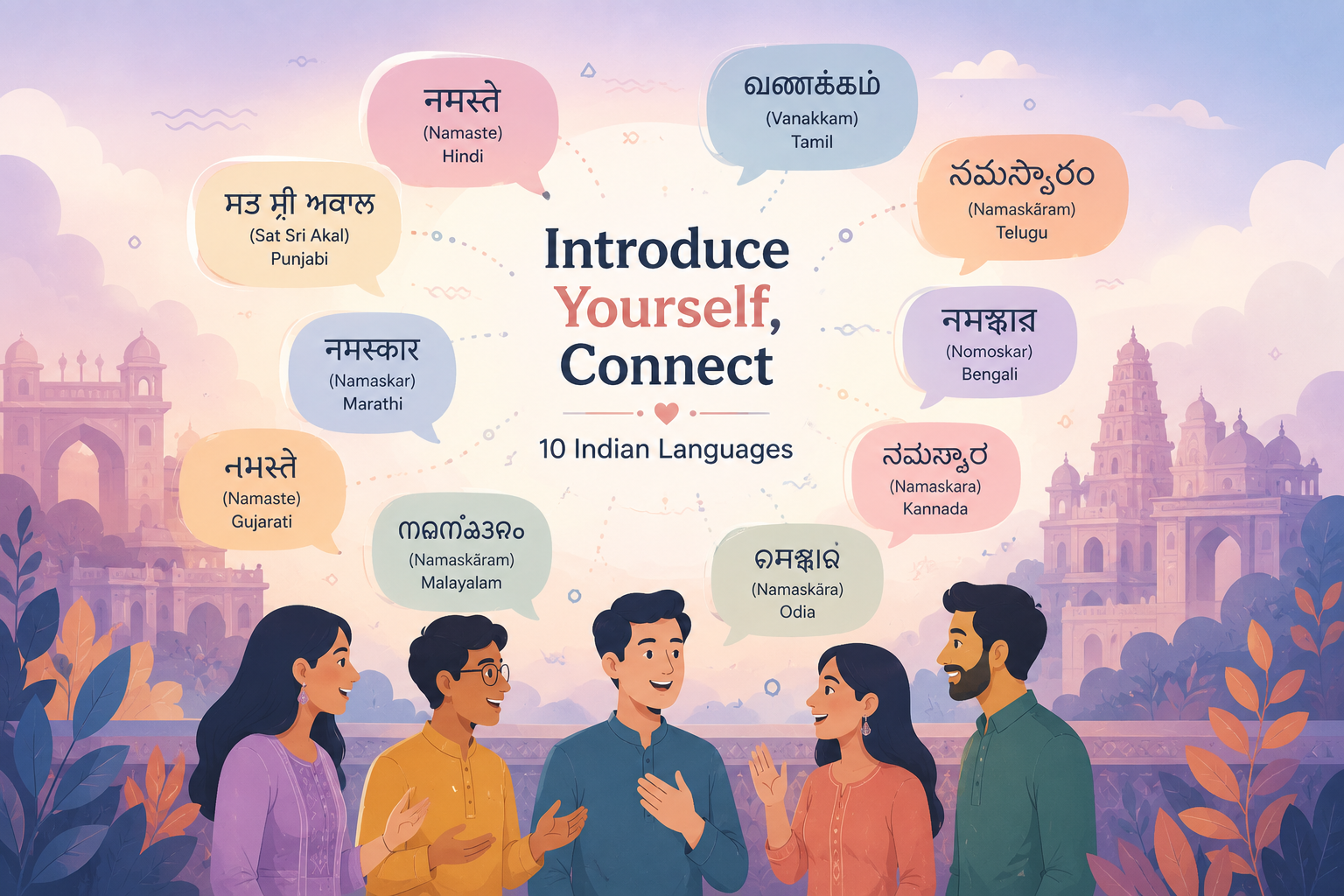
Moving to a new Indian city for work? Meeting your partner's family who speak a different language? Traveling across states? The first thing you'll need in any of these situations is a self-introduction in the local language.
Being able to say "My name is...", "I'm from...", and "Nice to meet you" in someone's mother tongue instantly creates warmth and connection. This guide covers complete self-introductions in 10 major Indian languages with native script, pronunciation, and the cultural context you need to get it right.
1. Hindi — हिंदी
Hindi is understood by the majority of India's population and serves as the lingua franca across North and Central India.
Key Phrases
| English | Hindi | Pronunciation |
|---|---|---|
| Hello | नमस्ते | Nuh-mus-tay |
| My name is [Name] | मेरा नाम [Name] है | Me-ra naam [Name] hai |
| I am from [City/Country] | मैं [City] से हूँ | Main [City] say hoon |
| Nice to meet you | आपसे मिलकर खुशी हुई | Aap-say mil-kar khu-shee hui |
| I am learning Hindi | मैं हिंदी सीख रहा/रही हूँ | Main Hindi seekh ra-ha/ra-hee hoon |
| I work at [Company] | मैं [Company] में काम करता/करती हूँ | Main [Company] mein kaam kar-ta/kar-tee hoon |
Full Introduction Example
नमस्ते! मेरा नाम प्रिया है। मैं बेंगलुरु से हूँ। मैं हिंदी सीख रही हूँ। आपसे मिलकर खुशी हुई!
Namaste! Mera naam Priya hai. Main Bengaluru say hoon. Main Hindi seekh rahi hoon. Aapse milkar khushi hui!
(Hello! My name is Priya. I am from Bengaluru. I am learning Hindi. Nice to meet you!)
Cultural tip: In Hindi, verbs change based on gender. Males say "raha/karta" and females say "rahi/karti." If you mix them up, people will still understand — don't let it stop you from speaking.
2. Tamil — தமிழ்
Tamil is the primary language of Tamil Nadu and has a 2,000+ year literary heritage.
Key Phrases
| English | Tamil | Pronunciation |
|---|---|---|
| Hello | வணக்கம் | Vuh-nuk-kum |
| My name is [Name] | என் பெயர் [Name] | En pey-ar [Name] |
| I am from [City] | நான் [City] இருந்து வருகிறேன் | Naan [City] irundhu varugiren |
| Nice to meet you | உங்களை சந்தித்ததில் மகிழ்ச்சி | Ungalai sandhithathil magizhchi |
| I am learning Tamil | நான் தமிழ் கற்றுக்கொண்டிருக்கிறேன் | Naan Tamizh katrukondirukkiren |
Full Introduction Example
வணக்கம்! என் பெயர் ராகுல். நான் டெல்லி இருந்து வருகிறேன். நான் தமிழ் கற்றுக்கொண்டிருக்கிறேன்!
Vanakkam! En peyar Rahul. Naan Delhi irundhu varugiren. Naan Tamizh katrukondirukkiren!
(Hello! My name is Rahul. I am from Delhi. I am learning Tamil!)
Cultural tip: Tamil speakers deeply appreciate any effort to speak their language. Even a basic "Vanakkam" with folded hands will earn you instant respect. Tamil culture values language pride, so your effort won't go unnoticed.
3. Telugu — తెలుగు
Telugu is the most spoken Dravidian language by native speakers, official in Andhra Pradesh and Telangana.
Key Phrases
| English | Telugu | Pronunciation |
|---|---|---|
| Hello | నమస్కారం | Nuh-mus-kaa-rum |
| My name is [Name] | నా పేరు [Name] | Naa pay-ru [Name] |
| I am from [City] | నేను [City] నుండి వచ్చాను | Nenu [City] nundi vachaanu |
| Nice to meet you | మిమ్మల్ని కలిసినందుకు సంతోషం | Mimmalni kalisinanduku santosham |
| I am learning Telugu | నేను తెలుగు నేర్చుకుంటున్నాను | Nenu Telugu nerchukuntunnaanu |
Full Introduction Example
నమస్కారం! నా పేరు అంజలి. నేను ముంబై నుండి వచ్చాను. నేను తెలుగు నేర్చుకుంటున్నాను!
Namaskaram! Naa peru Anjali. Nenu Mumbai nundi vachaanu. Nenu Telugu nerchukuntunnaanu!
(Hello! My name is Anjali. I am from Mumbai. I am learning Telugu!)
Cultural tip: Telugu is called the "Italian of the East" because most words end in vowels, giving it a musical quality. Don't rush your pronunciation — let the vowel endings ring out naturally.
4. Bengali — বাংলা
Bengali is the language of West Bengal and Bangladesh, known for its rich literary and artistic tradition.
Key Phrases
| English | Bengali | Pronunciation |
|---|---|---|
| Hello | নমস্কার | No-mosh-kar |
| My name is [Name] | আমার নাম [Name] | Aa-mar naam [Name] |
| I am from [City] | আমি [City] থেকে এসেছি | Aami [City] thekey esh-echi |
| Nice to meet you | আপনার সাথে দেখা হয়ে ভালো লাগলো | Aap-nar shaa-they dekha hoy-ey bhalo laaglo |
| I am learning Bengali | আমি বাংলা শিখছি | Aami Bangla shikh-chi |
Full Introduction Example
নমস্কার! আমার নাম বিকাশ। আমি চেন্নাই থেকে এসেছি। আমি বাংলা শিখছি!
Nomoshkar! Amar naam Vikash. Aami Chennai thekey eshechi. Aami Bangla shikhchi!
(Hello! My name is Vikash. I am from Chennai. I am learning Bengali!)
Cultural tip: Bengalis are famously proud of their language and culture. Attempting even a basic introduction in Bengali — especially if you're in Kolkata — will be met with warmth and likely a long, enthusiastic conversation.
5. Marathi — मराठी
Marathi is the official language of Maharashtra, spoken by over 83 million people.
Key Phrases
| English | Marathi | Pronunciation |
|---|---|---|
| Hello | नमस्कार | Nuh-mus-kaar |
| My name is [Name] | माझं नाव [Name] आहे | Maa-zhun naav [Name] aa-hey |
| I am from [City] | मी [City] हून आलो/आले | Mee [City] hoon aa-lo/aa-lay |
| Nice to meet you | तुम्हाला भेटून आनंद झाला | Tum-haa-la bhe-toon aa-nand zhaa-la |
| I am learning Marathi | मी मराठी शिकत आहे | Mee Marathi shi-kat aa-hey |
Full Introduction Example
नमस्कार! माझं नाव नेहा आहे. मी दिल्ली हून आले. मी मराठी शिकत आहे!
Namaskaar! Mazhun naav Neha aahe. Mee Delhi hoon aale. Mee Marathi shikat aahe!
(Hello! My name is Neha. I am from Delhi. I am learning Marathi!)
Cultural tip: In Mumbai, knowing basic Marathi phrases dramatically changes how locals interact with you. Auto drivers, shopkeepers, and neighbors all respond more warmly when you make the effort. Marathi has unique sounds like "zh" (झ) that take practice but are worth mastering.
6. Kannada — ಕನ್ನಡ
Kannada is the official language of Karnataka, home to India's tech capital Bengaluru.
Key Phrases
| English | Kannada | Pronunciation |
|---|---|---|
| Hello | ನಮಸ್ಕಾರ | Nuh-mus-kaa-ra |
| My name is [Name] | ನನ್ನ ಹೆಸರು [Name] | Nun-na heh-sa-ru [Name] |
| I am from [City] | ನಾನು [City] ಇಂದ ಬಂದಿದ್ದೇನೆ | Naanu [City] inda bandiddene |
| Nice to meet you | ನಿಮ್ಮನ್ನು ಭೇಟಿಯಾಗಿ ಖುಷಿಯಾಯಿತು | Nimmannu bhetiyaagi khushiyaayithu |
| I am learning Kannada | ನಾನು ಕನ್ನಡ ಕಲಿಯುತ್ತಿದ್ದೇನೆ | Naanu Kannada kaliyuttiddene |
Full Introduction Example
ನಮಸ್ಕಾರ! ನನ್ನ ಹೆಸರು ಅರ್ಜುನ್. ನಾನು ಹೈದರಾಬಾದ್ ಇಂದ ಬಂದಿದ್ದೇನೆ. ನಾನು ಕನ್ನಡ ಕಲಿಯುತ್ತಿದ್ದೇನೆ!
Namaskara! Nanna hesaru Arjun. Naanu Hyderabad inda bandiddene. Naanu Kannada kaliyuttiddene!
(Hello! My name is Arjun. I am from Hyderabad. I am learning Kannada!)
Cultural tip: If you've moved to Bengaluru for work, learning Kannada is one of the best investments you can make. While many people in the tech sector speak English and Hindi, switching to Kannada with local colleagues, auto drivers, and at restaurants instantly changes the relationship from transactional to personal.
7. Malayalam — മലയാളം
Malayalam is the language of Kerala, a state known for its high literacy rate and rich cultural heritage.
Key Phrases
| English | Malayalam | Pronunciation |
|---|---|---|
| Hello | നമസ്കാരം | Nuh-mus-kaa-rum |
| My name is [Name] | എന്റെ പേര് [Name] | En-tay peh-ru [Name] |
| I am from [City] | ഞാൻ [City] ആണ് | Nyaan [City] aanu |
| Nice to meet you | നിങ്ങളെ കണ്ടതിൽ സന്തോഷം | Ningaley kandathil santhosham |
| I am learning Malayalam | ഞാൻ മലയാളം പഠിക്കുകയാണ് | Nyaan Malayalam padikkukayaanu |
Full Introduction Example
നമസ്കാരം! എന്റെ പേര് മീര. ഞാൻ ദില്ലി ആണ്. ഞാൻ മലയാളം പഠിക്കുകയാണ്!
Namaskaram! Ente peru Meera. Nyaan Delhi aanu. Nyaan Malayalam padikkukayaanu!
(Hello! My name is Meera. I am from Delhi. I am learning Malayalam!)
Cultural tip: Malayalam has some of the most complex phonetics among Indian languages. The "nj" sound in "Nyaan" (I) and the retroflex consonants take practice. Keralites are known for their warmth and will be delighted if you attempt even a few words in Malayalam.
8. Gujarati — ગુજરાતી
Gujarati is the language of Gujarat, spoken by over 55 million people worldwide including large diaspora communities.
Key Phrases
| English | Gujarati | Pronunciation |
|---|---|---|
| Hello / How are you? | કેમ છો? | Kem chho? |
| My name is [Name] | મારું નામ [Name] છે | Maa-roo naam [Name] chhe |
| I am from [City] | હું [City] થી આવું છું | Hoon [City] thee aavoo chhoon |
| Nice to meet you | તમને મળીને આનંદ થયો | Tam-nay mal-ee-nay aa-nand tha-yo |
| I am learning Gujarati | હું ગુજરાતી શીખી રહ્યો/રહી છું | Hoon Gujarati shee-khee rah-yo/rah-ee chhoon |
Full Introduction Example
કેમ છો! મારું નામ સમીર છે. હું પુણે થી આવું છું. હું ગુજરાતી શીખી રહ્યો છું!
Kem chho! Maaroo naam Sameer chhe. Hoon Pune thee aavoo chhoon. Hoon Gujarati sheekhee rahyo chhoon!
(Hello! My name is Sameer. I am from Pune. I am learning Gujarati!)
Cultural tip: "Kem chho?" literally means "How are you?" but functions as a greeting in Gujarati, much like "What's up?" in English. It's the most natural way to start any conversation. Gujarati hospitality is legendary — expect to be offered chai and snacks within minutes of introducing yourself.
9. Punjabi — ਪੰਜਾਬੀ
Punjabi is the language of Punjab, known for its vibrant energy, music, and culture.
Key Phrases
| English | Punjabi | Pronunciation |
|---|---|---|
| Hello | ਸਤ ਸ੍ਰੀ ਅਕਾਲ | Sat-sri-akaal |
| My name is [Name] | ਮੇਰਾ ਨਾਂ [Name] ਹੈ | Me-ra naaN [Name] hai |
| I am from [City] | ਮੈਂ [City] ਤੋਂ ਹਾਂ | Main [City] ton haan |
| Nice to meet you | ਤੁਹਾਨੂੰ ਮਿਲ ਕੇ ਖੁਸ਼ੀ ਹੋਈ | Tu-haa-noon mil kay khu-shee hoyi |
| I am learning Punjabi | ਮੈਂ ਪੰਜਾਬੀ ਸਿੱਖ ਰਿਹਾ/ਰਹੀ ਹਾਂ | Main Punjabi sikh ri-ha/ra-hee haan |
Full Introduction Example
ਸਤ ਸ੍ਰੀ ਅਕਾਲ! ਮੇਰਾ ਨਾਂ ਦੀਪਿਕਾ ਹੈ. ਮੈਂ ਮੁੰਬਈ ਤੋਂ ਹਾਂ. ਮੈਂ ਪੰਜਾਬੀ ਸਿੱਖ ਰਹੀ ਹਾਂ!
Sat Sri Akaal! Mera naaN Deepika hai. Main Mumbai ton haan. Main Punjabi sikh rahi haan!
(Hello! My name is Deepika. I am from Mumbai. I am learning Punjabi!)
Cultural tip: "Sat Sri Akaal" is the traditional Sikh greeting meaning "God is the ultimate truth." It's used universally across Punjab regardless of religion. Punjabi culture is known for being warm and boisterous — expect big smiles and possibly a bear hug when you introduce yourself in Punjabi.
10. Odia — ଓଡ଼ିଆ
Odia is the official language of Odisha, one of India's classical languages with a literary history spanning over a millennium.
Key Phrases
| English | Odia | Pronunciation |
|---|---|---|
| Hello | ନମସ୍କାର | Nuh-mus-kaar |
| My name is [Name] | ମୋ ନାମ [Name] | Mo naam [Name] |
| I am from [City] | ମୁଁ [City] ରୁ ଆସିଛି | Mun [City] ru aasichi |
| Nice to meet you | ଆପଣଙ୍କୁ ଭେଟି ଖୁସି ଲାଗିଲା | Aapanunku bheti khusi laagila |
| I am learning Odia | ମୁଁ ଓଡ଼ିଆ ଶିଖୁଛି | Mun Odia shikhuchi |
Full Introduction Example
ନମସ୍କାର! ମୋ ନାମ ଆଦିତ୍ୟ। ମୁଁ ବେଙ୍ଗଳୁରୁ ରୁ ଆସିଛି। ମୁଁ ଓଡ଼ିଆ ଶିଖୁଛି!
Namaskaar! Mo naam Aditya. Mun Bengaluru ru aasichi. Mun Odia shikhuchi!
(Hello! My name is Aditya. I am from Bengaluru. I am learning Odia!)
Cultural tip: Odia is one of India's most underappreciated languages. The curvilinear Odia script is strikingly beautiful, and Odisha's cultural heritage — from the Jagannath Temple to Odissi dance — is deeply connected to the language. Speaking even basic Odia in Bhubaneswar or Puri will make you stand out as someone who truly cares about local culture.
Common Patterns Across Indian Languages
You may have noticed some patterns across all 10 languages that make learning easier:
- Most greetings derive from "Namaskara" — a Sanskrit word meaning "I bow to you." Hindi (Namaste), Telugu (Namaskaram), Kannada (Namaskara), Malayalam (Namaskaram), Marathi (Namaskar), and Odia (Namaskar) all share this root.
- Subject-Object-Verb order is standard across all Indian languages. "I Hindi learning am" is the natural word order in every language above.
- Gender affects verbs in many North Indian languages (Hindi, Marathi, Gujarati, Punjabi) but less so in South Indian languages (Tamil, Telugu, Kannada, Malayalam).
- Formal and informal forms exist in all Indian languages. The phrases above use formal "you" forms, which are always safer when meeting someone for the first time.
Go Beyond Introductions
A self-introduction opens the door, but real connection happens through conversation. Indilingo helps you go from "My name is..." to full fluency in any Indian language — all from the comfort of your mother tongue.
With AI-powered conversation practice, pronunciation feedback, interactive quizzes, and culturally immersive lessons, you'll build the confidence to speak naturally in any situation — from boardrooms to family gatherings.
Start learning for free.
Download Indilingo on the Google Play Store and take the first step today.
Follow us on Instagram, X (Twitter), and LinkedIn for daily language tips and cultural insights.
Loved the Blog?
Take your language learning journey a step further.
Explore Indilingo - beautifully designed, easy to use, and built for Indian languages.